
Designing a Bathroom Wetroom: What New Hampshire Homeowners Need to Know
If you are looking into an open layout for your upcoming bathroom remodel, a wetroom is a great option. It cuts out old-school shower lips and heavy glass enclosures, creating a clean look where the whole room is built to handle water safely.
At Shapiro Bathrooms & More, located in Hooksett, New Hampshire, we specialize in residential bathroom remodeling. Whether you live right here in Hooksett, across southern New Hampshire, or up in the Lakes Region, here is a practical look at what it really takes to build a wetroom that lasts.
Video: Inside a Bathroom Wetroom Build
Before diving into the structural details below, watch this video where Joshua Shapiro breaks down the fundamentals of planning and building a wetroom in your home.
The Structural Reality: Why Wetrooms Require a Lowered Subfloor
A lot of people think you can get a wetroom just by putting tile across your current floor. But since a wetroom does not have a raised plastic shower pan to hold the water, the floor itself has to do all the work to push water to the drain. That means the entire floor has to slope.
In most homes, the structural wood floor layers sit flat right on top of the framing pieces underneath. If you build a sloped mortar bed right on top of that flat plywood, your bathroom floor will end up way higher than the floor in your hallway. If you have standard wood flooring outside the door, adding that extra layer inside means you are going to have a big step-up waiting for you every time you walk into the bathroom.
To make the entry completely flush and seamless, we have to change the framing from the floor joists up. Joshua Shapiro explains how we handle it:
“The floor itself has to pitch. In standard construction, your plywood is laid over your joists. And so, in order to create a wet room, what has to happen is we need to build up that plywood, which is gonna affect the flooring on the outside… So what we have to do is we have to drop that plywood to the same level as the joists. And so you have to do this by pitching the subfloor and creating a system that’s gonna work in order to have a seamless transition—or at least as seamless as possible. Within three-quarters would be sufficient within the building trade, but we try to be within a quarter of an inch.”
Managing Water Flow and Why Toilet Placement Matters
Once the subfloor is lowered and sloped right, we waterproof the entire room. We rip out the old walls and put in new waterproofing backer board and floor membranes so water cannot find its way into the framing of your home.
When you design a wetroom, where you put your fixtures matters a lot—especially the toilet. A toilet drains straight down through a big hole cut into the floor, which makes that specific spot incredibly tough to seal up 100% against standing water. Because of that, your toilet needs to be placed a safe distance away from the shower area so it does not get hit by direct water spray all day long.
You also have to think about what happens if a drain slows down. With a normal shower pan, you have a tall lip that gives you a few gallons of safety room if a washcloth accidentally drops over the drain. In a wetroom, dropping the plywood builds a slight catchment area into the floor layout. It holds a smaller volume of water than a regular deep tub or pan, but it is exactly what keeps a sudden clog from flooding your hallways.
Choosing a Shower Drain That Actually Works
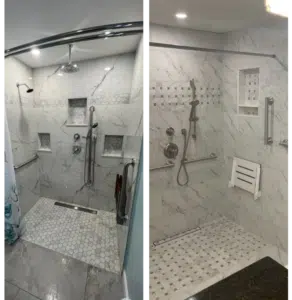 Linear drains—those long, skinny slots—are popular right now because they look modern against large tiles. But they can be a real headache to live with.
Because they are so narrow, almost every linear drain uses a tiny basket inside to catch hair before it clogs your pipes. Those little baskets fill up fast. If you do not pull off the metal grate and clean out that hair basket every few weeks, the drain will back up and fill your shower floor with standing water while you are trying to rinse off.
To keep things carefree and minimize your plumbing issues, we recommend keeping it simple:
“We normally recommend a larger drain—sometimes a 6-inch square drain—that goes into a full 2-inch pipe. Just because there’s really less of a chance of that to back up or have any drainage issues, and you wanna minimize your drainage issues with a wet room.”
Smart Layout Ideas for Open Bathrooms
An open layout lets you get creative with your space. Here are a couple of options that work great inside a wetroom:
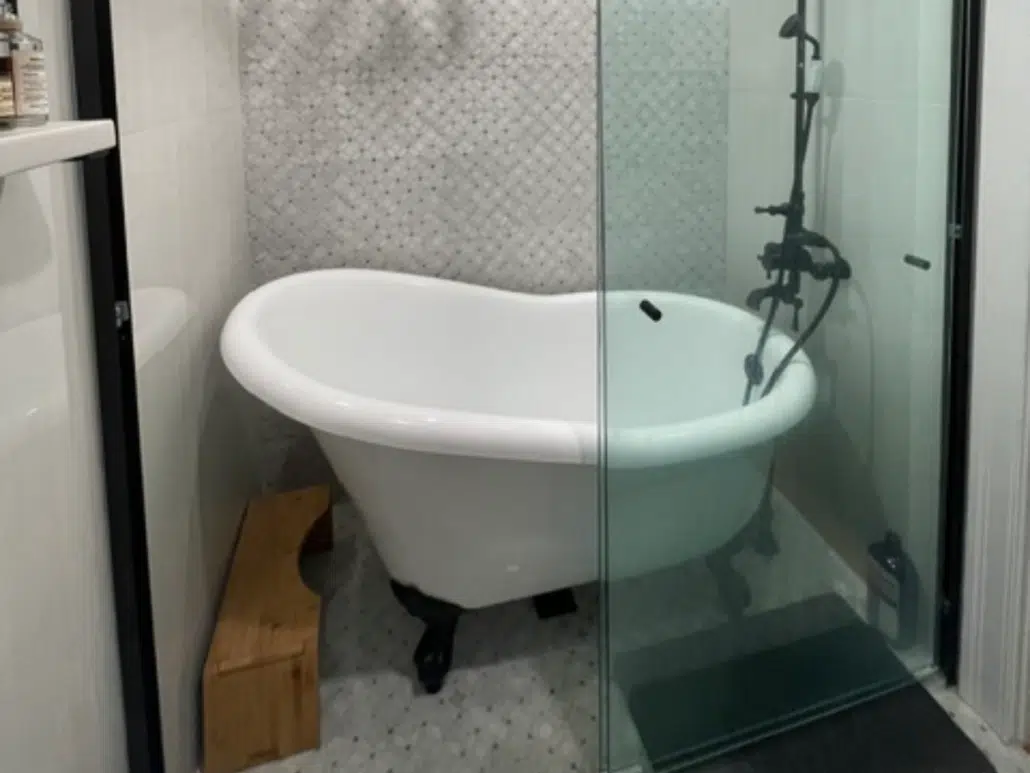
- The “Shub” Layout: This is a tub-in-shower experience where a freestanding bathtub sits right inside the waterproofed shower area. It lets you take a quick rinse shower before or after you use the soaking tub without dripping water across the room.
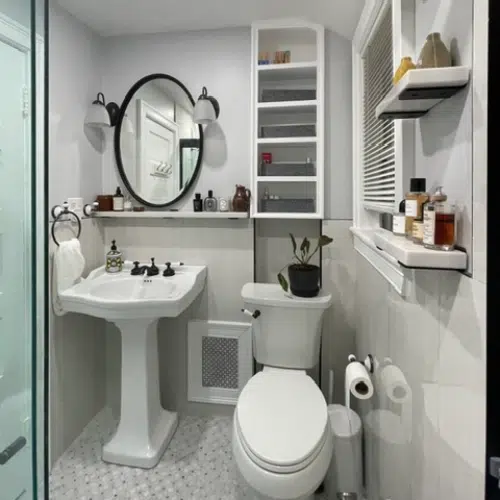
- Floating Vanities: Regular vanities that sit flat on the floor can rot out quickly if water pools around the bottom. European-style vanities hang right on the wall, keeping your cabinets completely off the floor so you do not have to worry about water damage.
A Quick Cleaning Tip
Since the whole floor is built to take water, a wetroom is incredibly easy to wash out. When we lay out the plumbing, we recommend putting a chrome, brushed nickel, or black hose bib adapter near the toilet or vanity. Your hand shower wand can only reach so far, so a built-in hose connection lets you spray down the entire floor tile to clean it out in seconds.
Why We Don’t Recommend Tiling Your Ceiling
When people remodel a wetroom, they sometimes ask about running tile all the way across the ceiling so the whole room is completely waterproofed. While it sounds like a good idea, it ruins the acoustics of your bathroom.
Tile and stone reflect sound waves instantly. If every single surface is covered in tile, the noise of the shower running gets incredibly loud. Joshua notes why standard drywall is usually a better choice for your ceiling:
“…just because when you do have drywall on the ceiling, it kind of keeps those echoes away and keeps those situations down. You know, just the volume of the shower going on while you’re in the shower is just amplified if you have a tiled ceiling.”
Frequently Asked Questions | Wetroom FAQ
Q: Can I put a wetroom on the second floor of my home?
A: Yes, wetrooms are safe for second-floor bathrooms. Because we remove the flat subfloor and lower the new plywood down into the joists to create the right pitch, we check your framing to ensure it can easily support the new mortar bed and tile work.
Q: Are wetrooms harder to keep clean?
A: No, they are actually much easier. Because there are no glass tracks, curtains, or shower curbs to trap grime, you can spray down the entire room. Using a wall-hung vanity and a built-in hose adapter makes cleaning the floor fast and simple.
Q: Why do you recommend a square drain over a linear drain?
A: Linear drains look great, but their tiny hair baskets clog quickly and require cleaning every couple of weeks to avoid backups. A 6-inch square drain connects to a full 2-inch pipe without those restrictive baskets, meaning it drains fast and needs almost no regular maintenance.
Q: Will water leak out into my hallway?
A: Not if the floor is prepped properly. We pitch the floor down toward the drain to keep water where it belongs, and we drop the subfloor to build a slight catchment area that holds the water volume while it drains away.
Plan Your Wetroom Layout with an Honest Budget
Building a wetroom right requires clear structural planning and an accurate budget before the first hammer swings. At Shapiro Bathrooms & More, we run a straightforward family business.
We do not use high-pressure sales tactics, artificial urgency, or aggressive “one-call-close” maneuvers—we need to see your space and establish an honest budget before we can do your job anyway.
If you want to look at layout concepts or discuss your project in person, come see us at our local showroom:
Shapiro Bathrooms & More Showroom
11 Kimball Drive, Hooksett, New Hampshire
We are always happy to have a conversation and help you plan out your remodel. Reach out to us today to get started.


